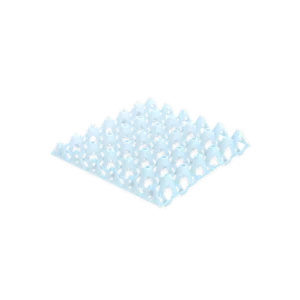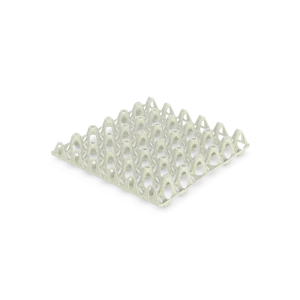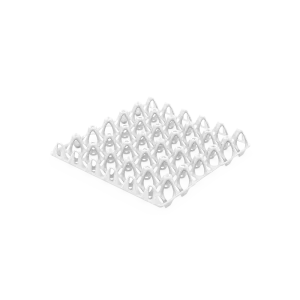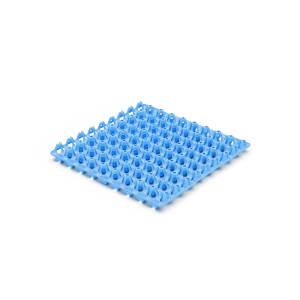

Egg collection and transport are a key part of the poultry sector. It is important to know these steps well to maintain production parameters and animal welfare, thus ensuring food safety. Giordano designs, develops and produces solutions for the handling of commercial eggs, for the egg product industry and for the egg hatching and incubation industry, with the aim of drastically reducing any possible damage to eggs. This dedicated equipment has now become the international industry standard.
Filter per animal
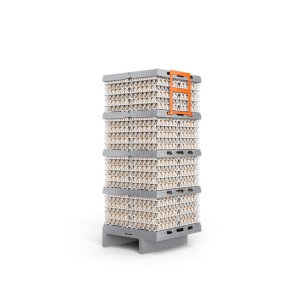
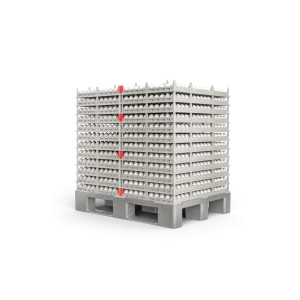
The key point of the offer is the technological and cutting edge egg handling systems. Eggs Cargo System for consumer eggs and HCS for hatcheries. Egg handling in modern times involves much more than just placing eggs on trays. In many countries around the world, egg trays are packed fully automatically by a so-called farm packer. The stacks of eggs are picked up by robots and placed on special pallets. A divider is placed between the stacks of eggs so that when the pallets are later unpacked, the robot can always pick up a new stack of 180 eggs and place them on the conveyor belt.
It goes without saying that all components [pallet – divider and trays] must fit together seamlessly so that the robots can do their job without any problems. The EggsCargoSystem [ECS] from Giordano was developed 25 years ago and proudly leads the modern market. Before ECS is delivered to the customer, the compatibility between the various components is checked. The functioning of the RFID chip present in the pallet is also checked.
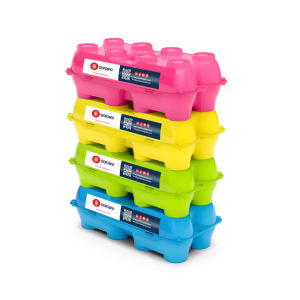
Plastic trays are available all over the world in many sizes, weights and qualities. Although the trays seem very similar at first glance, appearances can be deceiving. For egg trays, the design of the cups, the holes in which the eggs are placed, is of crucial importance. These must be designed in such a way that they offer maximum comfort and protection to the eggs. The plastic base material is also very important. Trays that feel sturdy but also hard are usually made of lower quality plastic. Although trays that feel harder and therefore less flexible seem better for the egg, nothing could be further from the truth. The egg trays must be flexible and soft to some extent because that guarantees maximum protection and comfort. The egg trays from Giordano meet all these properties. It is not unusual for the Giordano trays to last more than 15 years.
Because eggs come in different sizes and weights, Giordano supplies trays with different cup sizes. From quail eggs to duck eggs and everything in between. All trays are made from the best virgin HDPE available on the market and are provided with UV stabilization as standard, which slows down the ageing process of plastic.

If you have any questions or require further information, please reach out to us at
Ducks are generally larger than chicken eggs, so they may not fit in a standard chicken egg tray. To store duck eggs properly, you can consider two options. You can look for special egg trays designed for larger eggs, which have bigger compartments to accommodate the size of duck eggs. You can also consider multi-size Egg Trays, which can be adjustable or come in multiple sizes to fit different egg sizes. Ensure the storage method keeps the eggs stable and safe from cracking.
Plastic egg crates offer several advantages over corrugated boxes for storing and transporting eggs. They are more durable, resisting moisture and pressure damage, and offer reusability by being easy to clean and sanitize, reducing waste and costs. Their rigid structure provides better protection for eggs, minimizing breakage during transit. Additionally, plastic crates excel in hygiene by avoiding moisture absorption and bacterial buildup, making them safer for food handling. Their stackable design optimizes space and stability, while customization options like handles or locking mechanisms enhance functionality. Giordano offers her Lindamatic egg crates which are the perfect solution for transport and protection of eggs.
Yes, Giordano Global offers solutions for the transportation of quails and quail eggs. They have special transportation solutions and packaging materials that are designed to transport quails and their eggs safely and efficiently. Think about the well-designed coops and the special egg trays for 72 quail eggs. You can contact Giordano Global for more information about their products and services for the transportation of quails and quail eggs.
An egg tray with one cup size can carry a variety of chicken eggs. Whether it can do so safely depends on the size of the cups and the range of egg sizes it needs to accommodate. Most trays accommodate medium to large eggs, commonly produced in commercial settings, but smaller eggs may be unstable, and jumbo eggs might not fit securely. Deep or conically shaped cups provide better support for different sizes, reducing movement and breakage risks. Variations in egg size by breed or shell thickness also affect fit and safety. Flexible trays can adapt to different sizes, but operations handling diverse egg sizes may require multiple tray types. Giordano offers a wide range of egg trays all meant to protect the eggs the best possible way.
Washing egg trays, particularly those made by Giordano, involves ensuring the trays are effectively cleaned without causing damage to the material. The specific minimum and maximum temperatures for washing Giordano egg trays would typically depend on the material of the trays and the manufacturer’s recommendation. There are some general guidelines. For effective cleaning, a minimum temperature of 40°C (104°F) is often recommended to help remove dirt and organic matter. To make sure the trays are safe from warping or degradation, the maximum temperature of 60-70°C (140-158°F) is recommended. It is also important to use the appropriate detergent and to let the products air-dry.